
"new species"
6000 article(s) found

Description and treatment of flavor and taste of El Salvador Pacamara boutique coffee
Pacamara is full of flavor, rich and changeable is rare in other varieties, for example, in addition to fruit and rich taste, but also with apricot, vanilla plants, tropical fruits, chocolate, sweet spices and other changes. But there is no better than one. Mature Pakamara coffee trees will show a gradual decline in yield or occasional unstable flavor, and have high requirements for soil, water and microclimate.

Introduction to ancient native species of boutique coffee
In plant taxonomy, coffee belongs to the Genus Coffea family of Rubiaceae, and there are at least a hundred varieties of coffee under it. In the healthy Life post "falling in love with boutique coffee", I mentioned that the more common coffees are Arabica (Arabica, elegant flavor, is the main boutique coffee) and Robusta (or sturdy beans, rough flavor, caffeine content

Coffee bean variety small encyclopedia _ how much do you know about these beans?
There are four main coffee trees in the world, of which only two are of real commercial value and are planted in large quantities, and the quality of the coffee beans produced by other coffee trees is also higher than that of other coffee trees.
Classification and selection of coffee trees
Arabica Coffee and Variety improvement. What do the so-called families, genera and species of Arabica species mean in biological classification? In terms of biological classification, it is divided into boundary, phylum, class, order, family, genus and species from top to bottom, and the lower part of the species is subdivided into subspecies, varieties and varieties. Arabica coffee is generally thought to originate from the Ethiopian plateau and is widely divided.

Ethiopian coffee species Origin of Ethiopian coffee
Saifeng coffee beans grow in close to the natural environment, after years of planting under the same growth conditions, Ethiopian coffee beans have gradually adapted to the environment here. More than 60% of coffee beans are grown in forests or semi-forests. Large-scale coffee-growing villages account for about 35% of the country's total coffee production. These use multiple layers.

Description of Flavor in Robusta Coffee Bean Manor introduction of Grinding scale by Taste treatment
The Robusta Coffee Bean Manor produces regional flavor description, taste treatment, grinding scale introduction Tibika: Tibika is the original Arab coffee, the early Dutch carried this coffee tree and cultivated it in greenhouses in Europe, and spread it to Asia, Central and South America and other places, and then developed many varieties. Therefore, most of the selected coffee is its descendant. Tiebika's new leaves are yellowish brown

Guava Plain Manor in Guatemala New Oriental region Liquor-scented Coffee treated by the Sun
The SL28 variety is extremely rare in Central America. It originated from Lake Tanganyika in East Africa. It was discovered in 1931. It has broad and reddish leaves, can adapt to high altitude environment, and has excellent drought and disease resistance. It also has higher yield than traditional tree species and is unique in flavor. 1935 Scott Coffee Lab Scottish Labo
Are there any varieties of Arabica coffee that taste good? are they bitter? Why Arabica beans are so popular in the market?
Arabica variety family typica is the most classic high-quality Arabica species, which is the source of many commercial improved varieties at present. However, it has poor disease resistance, easy to catch rust leaf disease, and is one of the oldest native varieties in Ethiopia, with high yields in Hawaii. Its parietal leaf is red and copper, also known as

Tree species of coffee
The coffee beans we usually see are red fruits on trees, seeds without peel and pulp. It is a kind of plant, so there will naturally be different tree species, just as there are many kinds of apples.

There are so many kinds of coffee beans. What are the characteristics of Arabica coffee?
Professional coffee knowledge exchange more coffee bean information please follow the coffee workshop (Wechat official account cafe_style) front street-coffee bean variety profile coffee tree is a flowering plant of the coffee genus Rubiaceae, there are about 120 species, ranging in size from small shrubs to 18 meters tall trees. Wild coffee species grow irregularly in the tropics, and new things are still being discovered.

Description of local native species flavor in the latest production season introduction to the characteristics of Dumeso Cooperative
For the exchange of professional baristas, please follow the coffee workshop (Wechat official account cafe_style) Cup Test 92 points Ethiopia Sun Yega Xuefei G1 Dumeso (Ethiopia Natural Yirgacheffe Dumerso G1) Flavor description: grapes, sweet oranges and peaches, cocoa, full aroma, good cleanliness, citrus orange fruit notes, good sweetness, good cleanliness balance, black tea
What's the difference between Papua New Guinea coffee and Yerga Shefi?
What is the difference between Papua New Guinea coffee and Yegashev? The independent state of Papua New Guinea, referred to as Papua New Guinea for short, covers an area of 462,800 square kilometers and an area of 3.1 million square kilometers of marine exclusive economic zone. Papua New Guinea is one of the less developed countries in the world. The economy is dominated by agriculture, which accounts for 32 per cent of Papua New Guinea's economy. The main exports are minerals and

Coffee bean producing area-Oceania-New Guinea (New Guinea)
Well-known representative coffee: new Guinea is located in the north of Australia, also known as Papua New Guinea. The world's second largest island in the Pacific Ocean grows Arabica coffee trees, mainly in the north-central Hagen Mountains, where coffee beans are washed. The coffee trees of New Guinea are of the same species as the Jamaican Blue Mountains. The seeds were brought to New Zealand from the Blue Mountains in 1927.
Coffee knowledge Coffee Tree Classification
Arabica Coffee and Variety improvement. What do the so-called families, genera and species of Arabica species mean in biological classification? In terms of biological classification, it is divided into boundary, phylum, class, order, family, genus and species from top to bottom, and the lower part of the species is subdivided into subspecies, varieties and varieties. Arabica coffee is generally thought to originate from the Ethiopian plateau and is widely divided.

Introduction of Pacamara species of El Salvador Coffee in San Leticia Manor
Professional coffee knowledge exchange more coffee bean information please follow the coffee workshop (Wechat official account cafe_style) St. Leticia Manor Pacamara variety flavor description: "extremely bright fruit sweet and sour, with drupes, vanilla, chocolate and spices taste" sweet and bright, taste thick, creamy smooth, changeable layers, flavor amplitude is great. Production information:

Introduction of New Guinea Fine Coffee the taste characteristics of New Guinea coffee
Well-known representative coffee: new Guinea is located in the north of Australia, also known as Papua New Guinea. The world's second largest island in the Pacific Ocean grows Arabica coffee trees, mainly in the north-central Hagen Mountains, where coffee beans are washed. The coffee trees of New Guinea are of the same species as the Jamaican Blue Mountains. The seeds were brought to New Zealand from the Blue Mountains in 1927.
Selection of basic Coffee Tree Classification
Arabica Coffee and Variety improvement. What do the so-called families, genera and species of Arabica species mean in biological classification? In terms of biological classification, it is divided into boundary, phylum, class, order, family, genus and species from top to bottom, and the lower part of the species is subdivided into subspecies, varieties and varieties. Arabica coffee is generally thought to originate from the Ethiopian plateau and is widely divided.
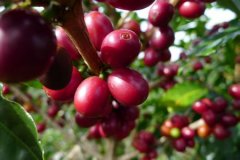
Introduction of Fine Coffee Bean producing areas-- New Guinea Coffee growing New Guinea Coffee
Well-known representative coffee: new Guinea is located in the north of Australia, also known as Papua New Guinea. The world's second largest island in the Pacific Ocean grows Arabica coffee trees, mainly in the north-central Hagen Mountains, where coffee beans are washed. The coffee trees of New Guinea are of the same species as the Jamaican Blue Mountains. The seeds were brought to New Zealand from the Blue Mountains in 1927.

The Fine Coffee Bean planting situation of Kahayang Gan Manor with unique Flavor geographical location, climate and altitude
CoffeeToffee:2006 launched a local new chain store in Surabaya at the end of the year. With its love of espresso, CoffeeToffee has expanded to more than 100 branches over a period of four years. The country's coffee exports are used as capital at the world-class level, making Indonesians more interested in entering the coffee industry, whether it's baking coffee, opening a coffee shop, or opening a shop.
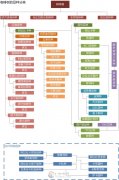
High-quality coffee common sense coffee tree classification selection
Arabica Coffee and Variety improvement. What do the so-called families, genera and species of Arabica species mean in biological classification? In terms of biological classification, it is divided into boundary, phylum, class, order, family, genus and species from top to bottom, and the lower part of the species is subdivided into subspecies, varieties and varieties. Arabica coffee is generally thought to originate from the Ethiopian plateau and is widely divided.